Invited SPEAKERS
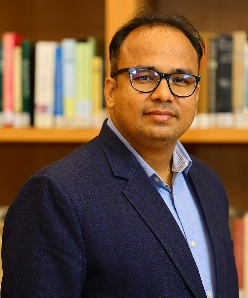
Prof. Prashant Sharma, O.P. Jindal Global University, India
Bio: Prof. (Dr.) Prashant Sharma is working as Professor & Vice Dean at the Jindal School of Banking & Finance (JSBF), O. P. Jindal Global University, Sonipat. Prior to joining JSBF, he was associated with Jaipuria Noida as Associate Professor and Chairperson (Admissions), IIHMR University Jaipur as Associate Professor and Coordinator (PhD Programme), Jaipuria Institute of Management Jaipur as Assistant Professor (Finance) and Programme Director (PGDM & FPM), and the National Institute of Financial Management (An institute of the Ministry of Finance, Government of India) as a full-time research fellow. At NIFM, he was part of the study team that conducted research on “Unaccounted Income and Wealth in India and Abroad,” popularly known as the Black Money Project, sponsored by CBDT, Ministry of Finance, Government of India. With close to 10 years of teaching and research experience, Prof. Sharma is a Fellow of the National Institute of Financial Management, Faridabad. He has completed a postgraduate degree in finance specialisation from the School of Management, Gautam Buddha University, Greater Noida, and graduated in the field of Mathematics from Dr. B. R. Ambedkar University, Agra. He is a keen researcher, experienced trainer, and dedicated teacher who has an interest in and expertise in the fields of finance and data analytics. He has expertise in various computational tools such as R, SPSS, E-Views, Python, etc. Apart from data analytics, his areas of research and teaching are asset pricing dynamics, corporate finance, capital markets, and econometrics. He has published numerous papers in Scopus and ABDC-indexed journals and also contributed significantly to various sponsored research projects funded by agencies of repute, including CBDT, the Airport Authority of India, and ICSSR. Prof. Sharma has also presented research papers at various national and international conferences and has been shortlisted to participate in various workshops sponsored by the Government of India, AICTE, ISI Calcutta, etc. He is also the recipient of various awards, such as the Best Faculty Award and the Best Research Methodology Award, for his contributions to teaching and research.
Title: Reinforcing financial and accounting resilience in digital circular platforms: The strategic role of digital governance and organizational culture
Abstract: Digital circular platforms are a new form of socio-technical ecosystems integrating digital technologies, financial innovation and organizational sustainability practices designed to build resilience and regenerative value. This research studied the effect of digital platform functionality, digital governance maturity and platform-based financial mechanism on financial and accounting resilience through the mediating impact of organisational culture for sustainability and circular business model innovation. Using dynamic capabilities view and socio-technical systems theory as a theoretical foundation, the current research develops and tests a serial mediation model using data from 297 professionals. Digital governance maturity and platform-based financial mechanism improve financial and accounting resilience significantly to a considerable degree. Organisational culture for sustainability and circular business model innovation exhibits serial mediating effects. Thus, it confirms that a mechanism exists between digital and financial enablers leading to resilience outcomes. The considerable variance in financial and accounting resilience can be explained by the model. Therefore, it can be inferred that adaptive governance and innovation-driven culture are critical to sustaining circular digital ecosystems. This study enhances the understanding of how digital governance and circular innovation are linked through organizational culture-based mediating pathways. Practically, it provides actionable guidance for platform managers and policymakers to facilitate their establishment of integrative digital financial and accounting systems that generate resilience, adaptability, and long-term sustainability for circular business systems.

Prof. Norhayati Zakuan, Universiti Teknologi Malaysia,
Malaysia
Bio: Professor Ts. Dr. Norhayati Zakuan is the External and Global Relations Manager at the Faculty of Management, Universiti Teknologi Malaysia (UTM). She holds a B.Eng. in Mechanical Engineering and a PhD in Mechanical Engineering (Quality) from UTM, as well as an MSc in Engineering and Manufacturing Management from Coventry University, UK. With over 15 years of industrial experience, she previously served as a Senior Mechanical and Quality Manager at Mitsubishi Electric Malaysia and as a Technical Specialist at COLAB Printing Ltd., UK. Since joining UTM, she has established an active research profile, publishing more than 100 papers in Web of Science and Scopus-indexed journals. Her scholarly work has received significant international recognition, with a Scopus H-index of 27. She is also a Graduate Member of the Institution of Engineers Malaysia (IEM) and a Registered Member of the Board of Engineers Malaysia (BEM).
Title: The Relationship of Enterprise Risk Management and Financial Performance in The US and UK Banking Sectors
Abstract: Banks play a central role in economic stability and growth but face exceptionally high risk exposure due to their business models and regulatory environments. As risks become more complex and interconnected, Enterprise Risk Management (ERM) has become a critical framework for improving risk oversight and informing strategic decision-making in financial institutions. This study compares ERM practices in the banking sectors of the United States and the United Kingdom and empirically examines the relationship between ERM practices and bank financial performance across these two leading banking systems. Guided by a positivist philosophy and a deductive approach, the research uses a quantitative, cross-sectional design. The sampling frame included 4,614 insured commercial banks in the US and 117 UK-headquartered banks. Primary data were collected through a structured survey of senior managers and executive directors, resulting in 444 usable responses (354 from the US and 90 from the UK). Structural equation modeling with SmartPLS 4 was used to test the conceptual model and hypotheses. The results indicate a significant positive relationship between ERM dimensions and financial performance in both US and UK banks. Despite structural and contextual differences between the two banking systems, no statistically significant differences were found in the relationship between ERM dimensions and financial performance across countries. Firm size also did not significantly moderate this relationship in either jurisdiction. These findings provide empirical support for ERM as a strategic tool that enhances value in the banking sector. This study addresses a comparative gap in the ERM literature by presenting cross-country evidence on the impact of ERM dimensions on bank financial performance. Using PLS-SEM on a substantial senior management survey dataset, it offers robust empirical insights into the relationship between risk governance and performance across different regulatory contexts. The findings demonstrate the performance and competitiveness benefits of strengthened ERM frameworks, raise awareness among banking managers of ERM’s strategic importance, and contribute to both academic debate and practical efforts to enhance financial resilience.

Prof. Hjh. Yusliza Mohd Yusoff, Universiti Malaysia
Terengganu, Malaysia
Bio: Professor Dr. Yusliza binti Mohd Yusoff is a
distinguished academic and researcher in the field of
business and management, widely recognized for her
pioneering work in sustainable human resource management
(HRM). Her research has significantly advanced understanding
in areas such as green HRM and employee green behavior. More
recently, her scholarly pursuits have expanded into emerging
domains including artificial intelligence in HRM, blockchain
applications, and the integration of HRM within the circular
economy.
With over 140 scholarly articles published in prestigious
Scopus-indexed journals, Professor Dr. Yusliza has made a
profound impact on the academic community. Her work has
garnered more than 6,000 citations on Scopus, affirming her
status as a thought leader in HRM, organizational behavior,
and sustainable management practices.
Professor Dr. Yusliza’s contributions have been widely
recognized. In 2022, she received the Icon Academia Award
from the Ministry of Higher Education and the Academic
Leadership Award from UMT, honoring her leadership in
teaching, research, and international collaboration.
By 2026, she is celebrated as one of Malaysia’s foremost
scholars in business and management. Her groundbreaking
research earned her a place on Stanford University’s list of
the world’s top 2% scientists for five consecutive years
(2022–2026), a testament to her global academic influence.
Title: Artificial Intelligence and ESG Performance: Capabilities, Challenges, and Pathways to Sustainable Value Creation
Abstract: As organizations increasingly invest in
artificial intelligence (AI), attention is shifting from
technological adoption toward understanding how AI
capabilities can contribute to Environmental, Social, and
Governance (ESG) performance. Despite growing interest,
knowledge remains fragmented across disciplines, with prior
studies typically focusing on isolated applications,
functional areas, or performance outcomes. This keynote
presentation synthesizes insights from a systematic review
of research spanning sustainability, information systems,
human resource management, and operations management to
examine the strategic role of AI capabilities in advancing
ESG objectives.
The review highlights that effective AI capabilities are
built upon three core foundations: access to high-quality
data, advanced algorithmic and analytical processes, and the
complementary integration of human expertise and judgement.
Findings reveal four interconnected domains through which AI
influences ESG performance: environmental sustainability,
social responsibility, governance and disclosure practices,
and broader cross-functional ESG outcomes. At the same time,
the evidence points to a sustainability paradox, where AI
can simultaneously generate positive ESG impacts while
introducing new ethical, governance, and environmental
concerns.
From a theoretical perspective, the discussion advances
understanding of how the Resource-Based View (RBV) and
Dynamic Capabilities Theory (DCT) can explain the strategic
value of AI-enabled resources and organizational
adaptability. From a practical perspective, the presentation
offers guidance on assessing AI readiness, developing
organizational capabilities, and ensuring that AI
initiatives translate into measurable ESG outcomes.
Ultimately, the keynote highlights how organizations can
leverage AI not merely as a technological tool, but as a
strategic capability for creating sustainable and
responsible business value.